ComfyUI Creations
Generative AI art exploring surrealism, cosmic imagery, and psychedelic visual landscapes. These pieces blend biological forms with technological motifs, organic decay with cosmic wonder.
Each image is the result of iterative prompt engineering and workflow refinement in ComfyUI — building visual programs that channel specific aesthetics: Dalí-esque dreamscapes, biomechanical fusion, graffiti-infused pop art, and abstract emotional explosions.
The Process
I'm a trained artist. Before I touched AI, I spent years drawing, painting, and building my own visual language. When I started working with Stable Diffusion, I didn't want to just type prompts and see what happened. I wanted to bring my own aesthetic into the model itself.
So I trained LoRA files on my own artwork using AI Toolkit. Now when I generate, the model isn't just pulling from its training data. It's pulling from my style, my compositions, the way I see form and color.
The workflows I build use multi-step diffusion. Before the VAE decodes the final image, I run it through different stages with different prompts, different LoRAs, different ControlNets. Sometimes those prompts conflict with each other. That tension is where the interesting stuff happens.
Step one might establish composition. Step two introduces color and texture from a different LoRA. Step three applies edge conditioning or pose guidance. By the time the image finishes, it's been shaped by multiple passes, each one adding intention and chance at the same time.
Control vs. Randomness
I'm not looking for perfection. I'm looking for the sweet spot between control and surprise. If I control everything, the work feels dead. If I let the model do whatever it wants, it's generic AI slop.
The multi-step approach lets me guide the generation without locking it down. I set the stage, introduce conflicting ideas, and let the diffusion process negotiate between them. The model makes choices I didn't explicitly make, but within a space I defined.
That's why these pieces don't look like typical AI output. They've been through a more complex flow, shaped by my own trained models and intentional workflow design. The randomness is there, but it's constrained randomness. Chaos with guardrails.
Models & Tools
Checkpoints
LoRAs
Conditioning Models
Tools
The Work
Rainbow Sculpture in Rustic Decay
Feb 8, 2025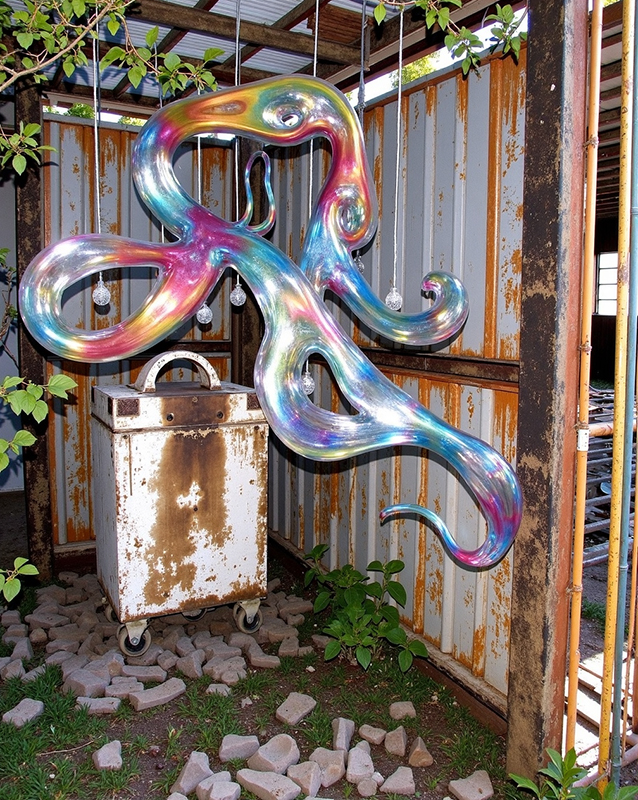
A luminous iridescent sculpture — like liquid rainbows formed into an octopus — hanging in a weathered industrial shed. The contrast between delicate, glowing forms and rusted decay creates a dreamlike quality: magic suspended in a forgotten corner.
Garden Portal / Cosmic Machine
Feb 8, 2025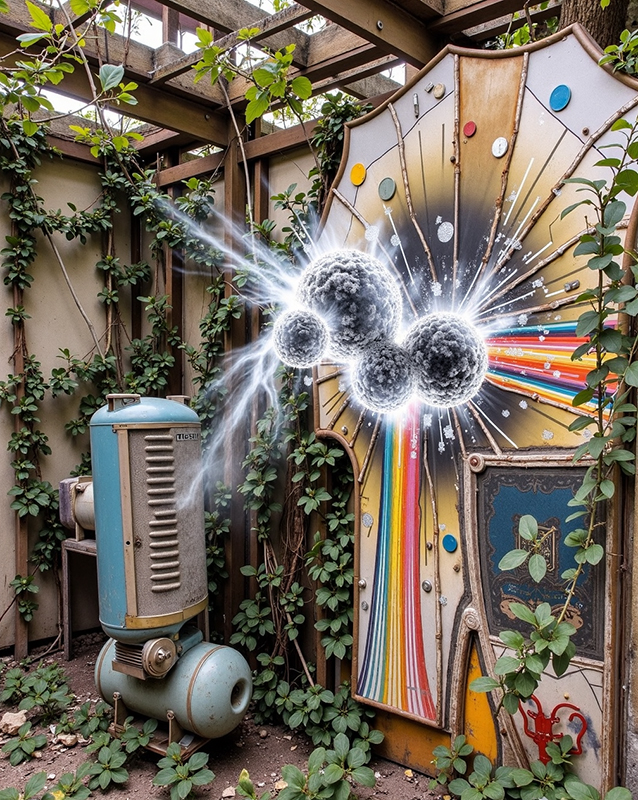
An overgrown garden hides a magical portal powered by vintage tech. A retro blue compressor sits beside an ornate Art Deco door emitting rainbow energy streams, while cosmic spheres burst forth — science meeting sorcery in an abandoned sanctuary.
Psychedelic Cosmic Menagerie
Feb 15, 2025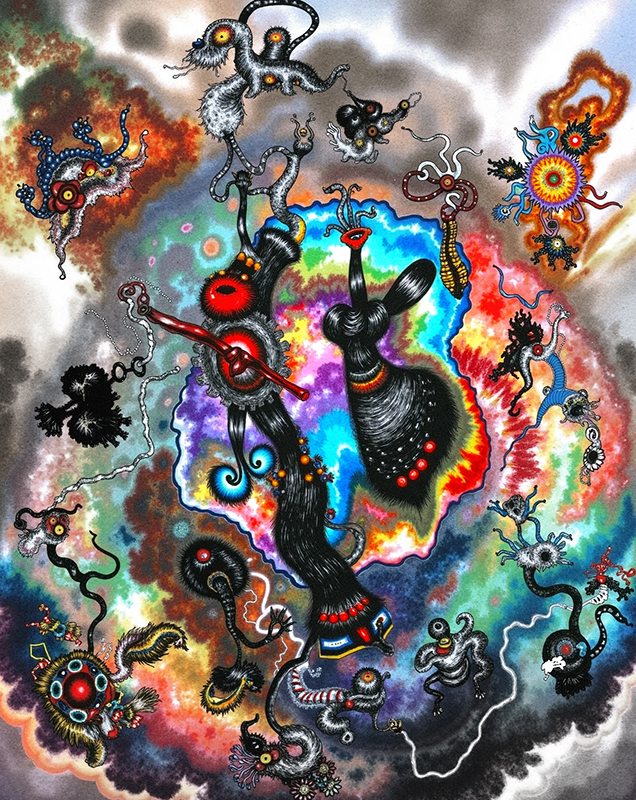
Dalí meets Giger on acid. A cosmic zoo of writhing creatures: a grotesque tree-being with gear mechanisms, a black rabbit-headed figure, dozens of alien entities floating in a tie-dye nebula. Every corner hides something new to shock your senses.
Cosmic Collage / Neon Dreamscape
Mar 15, 2025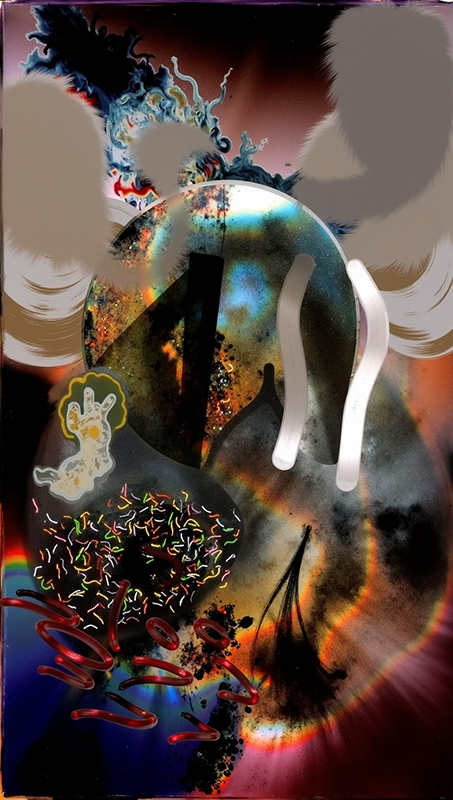
A visual explosion blending graffiti, pop art, and cosmic surrealism. An iridescent vinyl disc at center, ghostly handprint, neon squiggles, colorful sprinkles against starry voids. Chaos and harmony oscillating — find your own meaning among the fragments.
Mental Energy Burst
Dec 26, 2025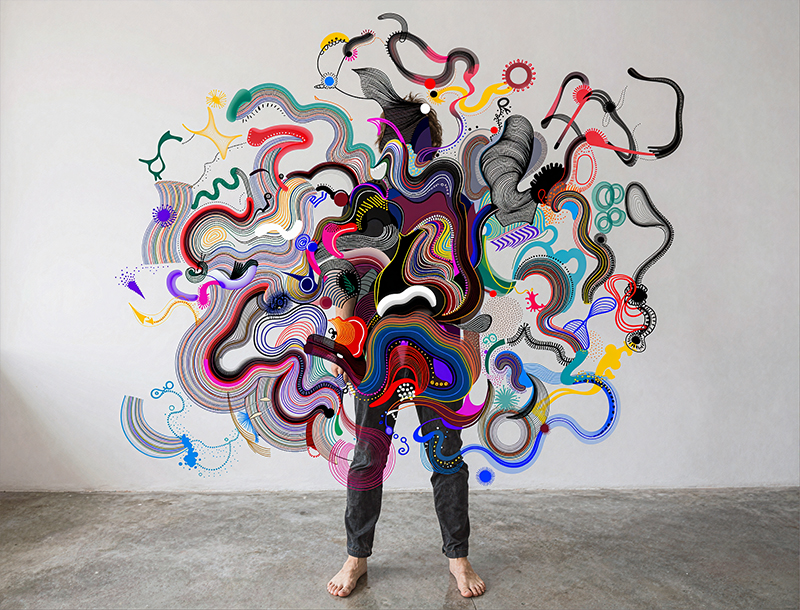
A barefoot figure on concrete, face obscured by an explosion of swirling multicolored graphics erupting from torso and head. Swirling lines, organic shapes, geometric motifs — representing creativity, mental chaos, or digital overload bursting forth.
The Workflow
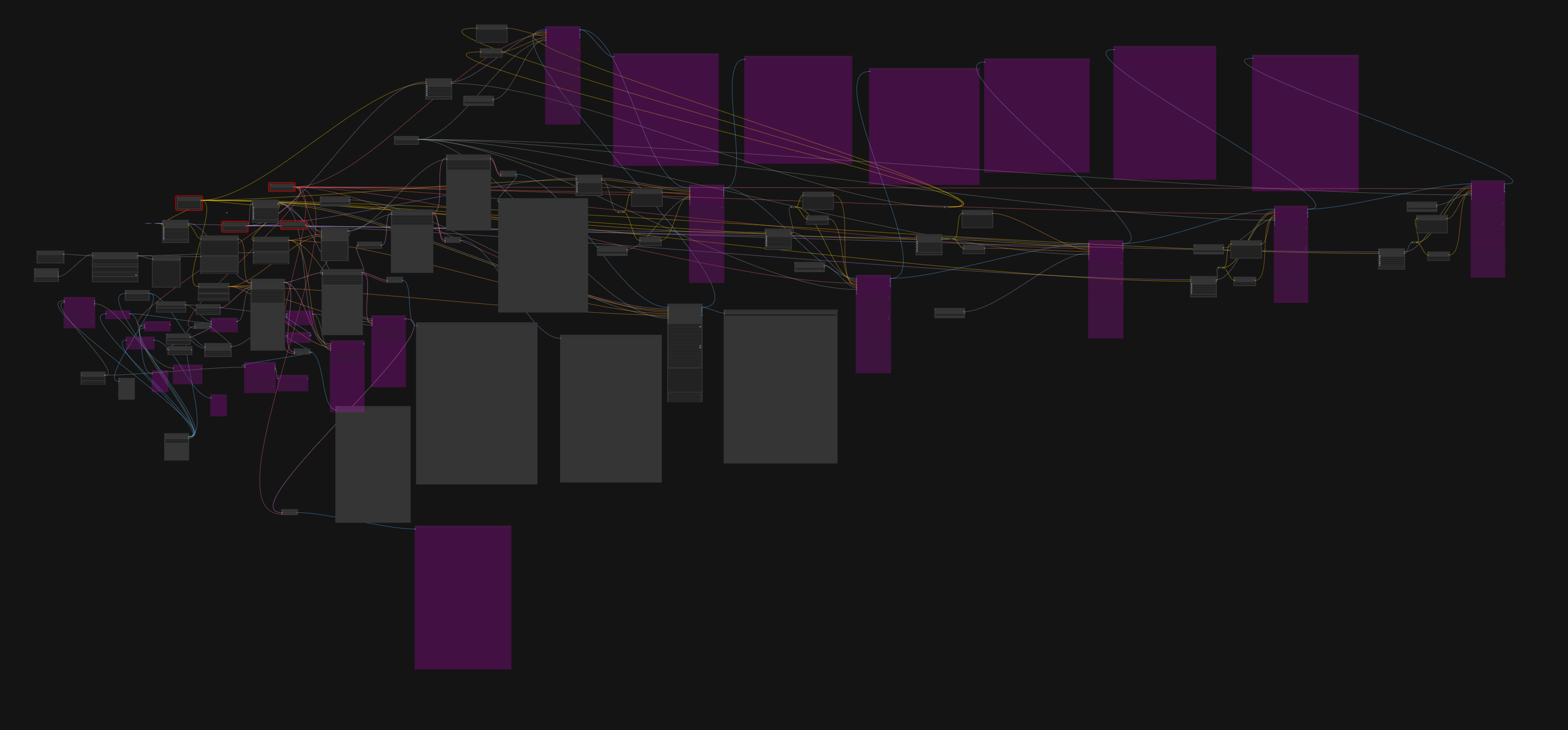
This node graph shows one of my ComfyUI workflows. Each box is a step in the generation pipeline. You can see checkpoint loaders on the left, conditioning nodes, multiple sampling passes, and post-processing on the right. This is the actual technical infrastructure behind the pieces above.
These works document an ongoing exploration of generative aesthetics — learning to speak the language of diffusion models, building workflows that channel specific visions, and embracing the beautiful unpredictability of AI-generated art.